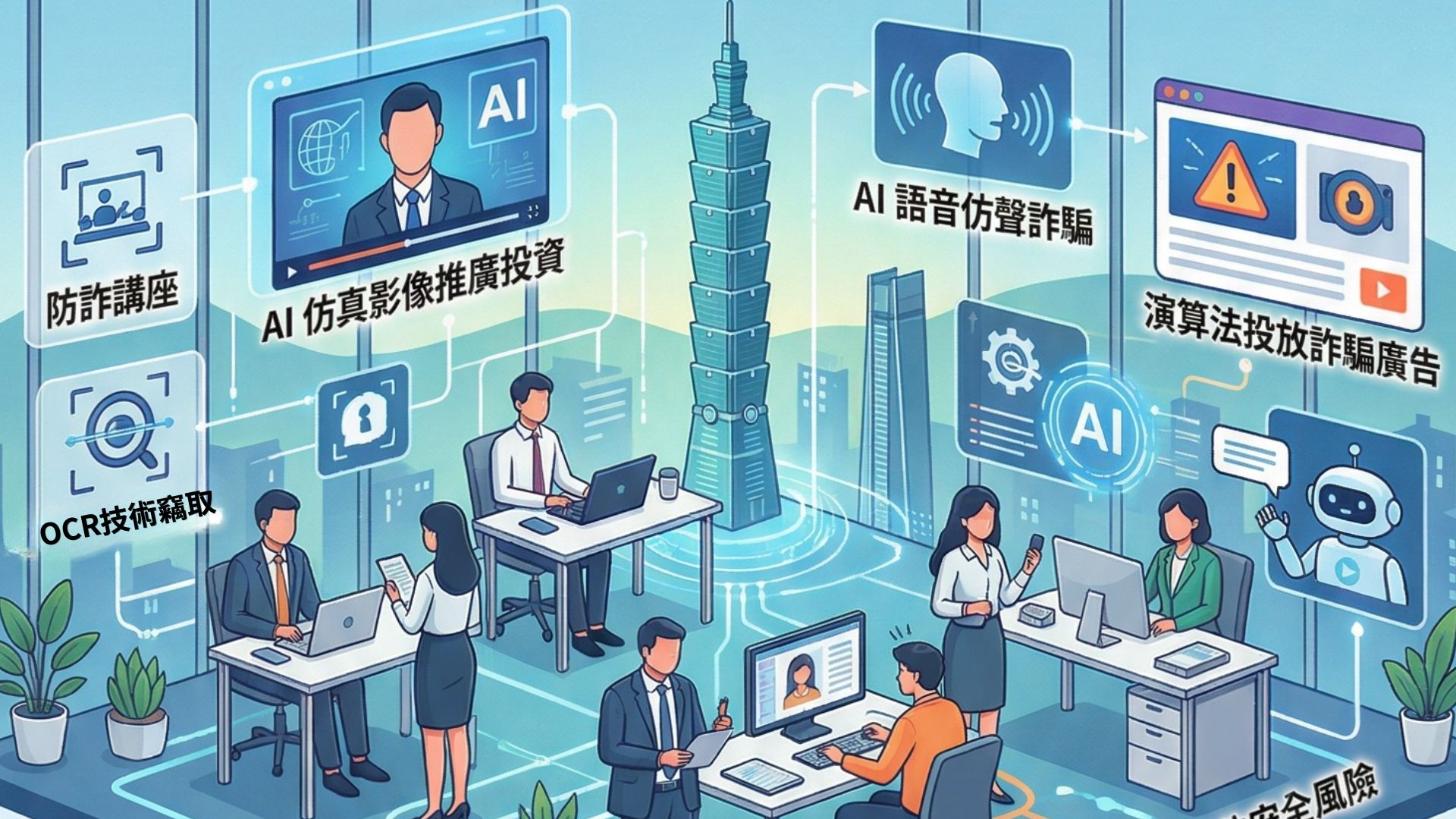
In Taiwan, scam cases have surged dramatically over the past three years, with both case volume and financial losses rising sharply alongside the rapid adoption of AI-driven tools such as voice cloning, deepfake videos, and fabricated investment platforms.
These technologies make scam scenarios highly realistic, drawing employees into risk not only in daily life but also during work breaks, commuting, and routine digital use.
Scams no longer target only the inattentive; they increasingly exploit the fast-paced, digitally saturated lives of modern workers. As a result, emotional shock, confusion, and financial stress often spill over into the workplace, creating wider impacts on concentration, performance, and well-being.
Introduction: AI as an Emerging Psychological Risk for Employees
Over the past three years, scams have become a major social concern in Taiwan. Both the number of cases and the total financial losses have increased dramatically. The emergence of technologies such as AI voice cloning, synthetic video generation, and fraudulent investment platforms has made scam scenarios increasingly realistic.
Most scams no longer occur through face-to-face encounters. Instead, they infiltrate daily life through social media platforms, messaging applications, and mobile devices. These attempts often appear during moments when employees are either relaxed or preoccupied. Examples include scrolling through a phone during a commute, checking messages while waiting for an elevator, or briefly browsing social media during a lunch break. In these moments, risks can emerge instantly.
A single lapse in attention or a brief moment of misjudgment can result in financial loss and, in some cases, may even lead victims to become unwilling intermediaries in fraudulent schemes. The emotional shock associated with these experiences tends to occur rapidly and often during working hours. Feelings of anxiety, confusion, and distress can therefore spill directly into the workplace. This may trigger a chain reaction that affects concentration, interpersonal interactions, and overall work rhythm.
For Employee Assistance professionals, recognizing scams as a form of psychological stressor has become increasingly important. Developing prevention and intervention strategies in collaboration with organizations is therefore a growing priority in EAP practice.
1. Taiwan’s AI-Enabled Scam Landscape and High-Risk Groups
According to official statistics, scam activity in Taiwan has grown exponentially in recent years. From 2022 to 2025, the number of reported cases increased from 29,509 to 148,389. During the same period, total financial losses rose from NT$7.33 billion to NT$76.62 billion (National Police Agency, Ministry of the Interior, 2025).
The introduction of AI tools since 2024 has further accelerated the automation and precision of scam operations. Techniques involving cryptocurrency schemes, fraudulent investment platforms, fake job advertisements, and AI-generated voice intimidation tactics have increased the likelihood that victims will lose situational awareness during decision making.
| Year | Number of Cases | Financial Loss (NTD billions) |
| 2022 | 29,509 | 7.33 |
| 2023 | 37,823 | 8.94 |
| 2024 | 118,535 | 48.76 |
| 2025 | 148,389 | 76.62 |

1.1 Diversified AI Scam Scenarios
In recent years, scam tactics in Taiwan have evolved rapidly. With the widespread availability of AI technologies, scams have shifted from text messages and phone scripts to immersive scenarios that incorporate synthetic videos, voice cloning, and highly realistic video communication.
Traditional scams such as impersonation calls, fraudulent law-enforcement claims, or romance-investment schemes now resemble carefully scripted interactive experiences. Victims often believe they are communicating with real individuals or legitimate institutions rather than encountering a coordinated deception.
The effectiveness of AI-enabled scams lies in their ability to combine technological realism with a common cognitive assumption that visual or auditory evidence reflects reality. When images, voices, and conversational patterns appear natural, individuals may lower their vigilance and overlook warning signals that would otherwise raise suspicion.
According to the Taiwan Digital Security Development Association (Liu, 2025), AI has become deeply embedded in modern scam operations, particularly through the following mechanisms:
- AI Voice Cloning: Fraudsters replicate the voices of customer service representatives, colleagues, or family members in order to increase credibility and trust.
- Deepfake Media: Synthetic videos are used to impersonate celebrities or public figures promoting investment opportunities, health products, or charitable initiatives.
- Automated Chatbot Scam Systems: AI chatbots manage ongoing conversations with victims, simulate emotional responses, and maintain long-term engagement.
- OCR-Based Information Extraction (Optical Character Recognition): Malicious applications scan photo galleries and automatically identify sensitive information such as mnemonic phrases or financial account details.
- Algorithm-Driven Targeted Scam Advertising: Fraudulent advertisements are distributed through social media advertising systems to reach specific demographic groups, including middle-aged women or foreign workers.
According to anti-fraud guidance issued by the National Police Agency (2025), common scam types include fake online shopping, fraudulent investment schemes, ATM installment cancellation scams, romance scams, impersonation scams, government impersonation, fake recruitment opportunities, and compromised social media accounts.
Among these categories, fake recruitment and activity-based offers account for the largest proportion of cases (63.49%), indicating that many victims are targeted during periods of job search or career transition. This is followed by fraudulent investment schemes (27.62%) and government subsidy scams (5.19%), reflecting a pattern of increasingly segmented and situationally tailored scam strategies.
1.2 High-Risk Groups
Analysis of fraud statistics from Taiwan’s Criminal Investigation Bureau for the period 2024–2025 identifies three primary high-risk groups:
- young and middle-aged adults
- middle-aged and older women
- foreign employees
Each group tends to be targeted through different scam tactics.
(1) Young and Middle-Aged Adults (Ages 18–39): Highest Exposure to Online Environments
This group demonstrates the highest exposure to digital environments and social media platforms. They frequently encounter fraudulent investment groups, AI-generated videos, and targeted online advertisements. Within the workplace, individuals in this age range typically represent the core workforce and often carry substantial workloads. When scams occur, the resulting financial and emotional stress may lead to reduced concentration, emotional fluctuations, and decreased work performance. Financial losses may also quickly affect personal stability and overall quality of life.
(2) Middle-Aged and Older Women (Ages 50 and Above): Highest Risk of Large Financial Loss
Women in this age group often manage both professional responsibilities and family caregiving roles. When victimized by scams, the financial consequences may be significant. These experiences are frequently accompanied by strong feelings of shame, self-blame, and perceived loss of competence.
Many victims worry about the impact on their families and fear being judged by others as careless or naive. This emotional burden may intensify psychological distress and influence both family relationships and work performance.
(3) Foreign Employees
Fraudsters often exploit information gaps, cultural differences, and limited support systems when targeting foreign employees. Language barriers and unfamiliarity with local regulations or digital platforms may increase vulnerability to deceptive scenarios.
2. Service Observations from Belayer EAPs: When Scams Enter Employees’ Work Lives
According to Belayer EAPs service data from 2024 to 2025, scam-related concerns accounted for approximately 2% of all help-seeking cases. However, within civil legal consultations, the proportion increased from 5% in 2024 to 16% in 2025, indicating a notable rise in scam-related legal involvement, suggesting that scam incidents frequently involve legal procedures and financial complications in addition to psychological distress.
In many of these cases, employees reported symptoms such as anxiety, irritability, insomnia, and feelings of helplessness, which are consistent with the psychological impact commonly associated with financial stress. Research indicates that approximately 46% of individuals experiencing financial or debt-related problems also experience mental health difficulties (MAMH, 2024).
When financial loss is combined with feelings of having been deceived, self-blame, or shame, the psychological impact becomes more severe. This combination may lead to reduced self-worth, social withdrawal, and impaired functioning (Richardson et al., 2013).
In practice, many employees do not initially seek legal assistance following a scam incident. Instead, they often approach EAP services due to emotional distress or sleep disturbances, suggesting that scam-related experiences frequently emerge first as psychological stressors rather than legal issues.
2.1 Emerging Scam Patterns: Cryptocurrency and Emotionally Manipulative Investment Schemes
Within Belayer’s case classification system, fraudulent cryptocurrency investment schemes account for 44.4% of scam-related cases, making them the most common type.
These scams often combine celebrity endorsement videos, fake investment communities, and AI-generated content to gradually persuade victims to transfer funds. Other scam categories include online shopping fraud, loan scams, romance-investment schemes, and buyer scams, each representing roughly 10% to 20% of cases.
Gender and age distribution patterns show that female employees represent a higher proportion of victims, while young to mid-career adults aged 24 to 39 most frequently seek assistance.
This group typically engages heavily in digital environments where online shopping, financial transactions, and social communication occur primarily through internet platforms. As a result, the frequency of exposure to potentially fraudulent content increases, creating greater vulnerability to scam attempts.
2.2 Psychological Impact of Scams and Their Influence on Workplace Functioning
Employee narratives during consultations reveal that scam experiences are often accompanied by complex and intense emotional reactions. Commonly reported emotions include anger, anxiety, sadness, shock, confusion, and high levels of stress. Many victims also report strong feelings of self-blame and shame, which may discourage them from seeking help from colleagues, friends, or family members.
These emotional reactions are not merely temporary responses. They often continue to influence work concentration, emotional stability, and daily functioning.
According to assessments using the Workplace Outcome Suite (WOS):
- 67% of victims reported a noticeable decline in work concentration
- 78% reported reduced life satisfaction
- 33% indicated that their job performance had been negatively affected
These findings suggest that scams do not only result in financial loss. They can also generate long-term psychological consequences, which may translate into hidden organizational costs such as reduced productivity, increased absenteeism, emotional volatility, or strained workplace relationships.
2.3 Internal Consequences of Scam Victimization: Trust Erosion, Disrupted Routines, and Financial Anxiety
Following scam experiences, many employees report impacts that extend beyond financial loss. Based on consultation data, three major psychological consequences frequently emerge.
(1) Decline in Trust Toward Others and Society
Employees who have experienced scams often report that they no longer trust online information. Some also become overly cautious even when receiving messages from colleagues or friends. This heightened vigilance can create new forms of social pressure and strain interpersonal interactions.
(2) Disruption of Daily Routines
In addition to sleep disturbances, intrusive memories, appetite changes, and fatigue, employees often experience disruptions to their daily routines due to the administrative and legal processes that follow a scam incident.
Many victims must take leave from work to file police reports, attend legal proceedings, or communicate with financial institutions. These disruptions alter their normal schedules and gradually accumulate additional stress across both psychological and practical dimensions. As these pressures increase, employees may experience declining stability and reduced quality of life.
(3) Loss of Financial Security
Even when the financial loss is relatively modest, victims often report persistent concerns such as fear of further unauthorized transactions or worry that their accounts may be compromised. These anxieties can cause individuals to become overly cautious or distressed about financial management.
From an EAP perspective, the consequences of scams extend far beyond financial loss. They can undermine emotional stability, interpersonal trust, and personal self-worth, while simultaneously increasing financial pressure and daily life disruption.
Events that appear to occur within the private sphere frequently spill into the workplace, contributing to reduced concentration, emotional instability, and strained workplace interactions.
For this reason, organizations should not limit employee support strategies to stress management or emotional assistance alone. Digital fraud prevention and financial security awareness must also be incorporated into workplace mental health frameworks in order to help employees maintain stability and functioning in an increasingly complex risk environment.
3. Psychological Mechanisms Behind Scam Victimization: From Situational Manipulation to Emotional Trauma
3.1 How Fraudsters “Read the Mind”: Manipulative Scenarios and Psychological Triggers
(1) Exploiting the Sunk Cost Effect and Loss Aversion
Fraudsters understand that individuals are highly susceptible to sunk cost bias and gambling-style decision distortions. Many victims recognize early warning signs but hesitate to stop because they have already invested time or money. They may believe that one more attempt will help recover their losses.
Over time, emotional pressure gradually overrides rational judgment, causing risks and losses to escalate.
(2) Exploiting Fear of Authority and Information Asymmetry
Symbols of authority such as uniforms, professional titles, or legal terminology are frequently used to create psychological pressure. When victims are told that their bank accounts are linked to criminal investigations or that they may face arrest or legal interrogation, fear significantly reduces their ability to think critically.
Fraudsters often further isolate victims by instructing them not to inform anyone else, ensuring that victims remain fully immersed in the fraudulent scenario.
(3) Using Social Proof and Scarcity Pressure
In investment scams, fraudsters often create active group chats filled with fabricated accounts posting screenshots of profits, generating the illusion of widespread participation and consensus.
At the same time, they impose limited-time opportunities or countdown mechanisms that compress decision-making time. Victims are pushed to make rushed decisions that they would normally avoid, believing that they must act quickly in order to keep up with others.
3.2 Psychological Consequences of Scam Victimization
(1) Shame Responses and Cognitive Dissonance
Contrary to common assumptions, victims often experience shame rather than anger. AI-generated videos, voice cloning, and highly realistic deception create scenarios that appear extremely convincing.
After the event, many victims repeatedly question themselves and wonder how they failed to recognize the fraud. This self-blame can trigger cognitive dissonance and concealment behaviors, causing individuals to delay seeking assistance (Konnikova, 2016). The deeper the sense of self-blame, the more difficult it becomes to discuss the incident openly.
(2) Reduced Self-Efficacy and Loss of Confidence
Scam experiences can undermine self-efficacy, particularly when associated with perceived failure and emotional distress (Bandura, 1997), victims may begin to doubt their judgment and decision-making ability. Some develop the belief that they are prone to making poor decisions. These negative beliefs may extend into other areas of life, contributing to avoidance behaviors, withdrawal, and reduced confidence, which may subsequently affect workplace concentration, interpersonal interactions, and daily functioning.
(3) Emotional Exhaustion and Psychological Imbalance
Service observations from Belayer EAPs indicate that scam victims frequently experience anxiety, emotional fluctuations, irritability, insomnia, fatigue, and reduced attention. These symptoms reflect the strong connection between financial stress and psychological distress (MAMH, 2024).
Therefore, scam incidents should not be understood merely as financial harm. They represent a psychological shock that affects the entire human functioning system.
4. Building a Workplace-Based Anti-Fraud Support System: Belayer EAPs Three-Tier Prevention Model
AI-enabled scams combine technological sophistication and psychological manipulation, making them an increasingly significant risk to employees’ emotional stability, concentration, and financial security.
To address this complex risk environment, Belayer EAPs has developed a three-tier prevention framework, providing organizations with support that ranges from awareness and early identification to post-incident intervention.
Belayer EAPs also strengthens internal EA professionals’ capacity through anti-fraud training and resource mapping, enabling more effective responses to high-risk cases and ensuring that employees receive comprehensive support when facing scam-related challenges.
4.1 Primary Prevention: Strengthening Awareness and Education
Primary prevention focuses on reducing the likelihood that employees will enter fraudulent scenarios by strengthening general awareness and risk recognition.
Belayer EAPs supports organizations by providing accessible educational resources that gradually build employees’ judgment capacity within both work and daily life contexts. These resources include:
- Anti-fraud and financial security seminars
- Educational newsletters available throughout the year
- Short video learning modules through online learning platforms
- Multilingual anti-fraud educational materials regularly updated
Through these ongoing communication channels, anti-fraud awareness becomes embedded in employees’ everyday information environment and gradually develops into stable preventive behavior.
SOS Anti-Fraud Action Guide
In addition to education, Belayer EAPs promotes an easy-to-remember response framework called the SOS Anti-Fraud Action Guide, which provides employees with clear steps when encountering suspicious situations. SOS stands for:
- Save Evidence: Retain all records including text messages, transaction details, and platform communications.
- Observe Carefully: Consider whether the other party promises unusually high returns, requests access to financial accounts, or asks to bypass standard banking procedures.
- Seek Help: Immediately contact Taiwan’s 165 Anti-Fraud Hotline, report the incident to a nearby police station, and consult EAP services for legal or psychological assistance if necessary.
This structured guidance helps employees take immediate action during moments of confusion or emotional distress, reducing delays in seeking help and increasing the likelihood of protecting financial assets.
4.2 Secondary Prevention: Early Identification and Manager Awareness
Secondary prevention focuses on employees who may already be exposed to higher scam risks or who exhibit early warning signals.
Supervisors often serve as the first observers of employee behavioral changes. Therefore, enhancing managerial awareness is a key component of early prevention.
Belayer EAPs incorporates scam awareness into manager briefings and sensitivity training, helping supervisors understand common scam tactics, typical persuasion strategies, and behavioral changes employees may display when facing risk.
Training also includes empathetic communication techniques, demonstrating how managers can ask supportive questions without judgment and guide employees toward appropriate support resources.
Through these capabilities, managers are better equipped to recognize warning signals and encourage employees to access proper assistance channels before risks escalate.
4.3 Tertiary Prevention: Post-Incident Recovery and Support
Tertiary prevention focuses on employees who have already experienced scams or strongly suspect they have been targeted.
The goal is to help employees restore emotional stability, reconstruct the event narrative, and regain functional stability at work, while providing legal and psychological consultation when needed.
(1) Emotional Stabilization and Case Clarification:
Case managers first assist employees in reconstructing the sequence of events and understanding the situation more clearly. Victims often experience intense shame, frustration, and emotional overload during the early stages. EAP case managers therefore play a stabilizing role, helping employees identify immediate actions such as organizing available evidence and determining the next practical steps.
(2) Legal Assistance and Process Preparation
When a scam is confirmed, case managers assist employees in accessing legal consultation and understanding both civil and criminal procedures. They also help prepare and organize necessary evidence.
These clear steps provide victims with a renewed sense of direction during a confusing period and support them in protecting their rights.
(3) Follow-Up Care and Ongoing Support
After legal processes begin, case managers continue monitoring employees’ emotional well-being, workplace functioning, and daily life stability.
Some victims may later experience withdrawal, social avoidance, or disrupted routines. Continued support and follow-up care are therefore essential. When necessary, psychological counseling is arranged to help employees gradually restore emotional stability and return to normal work and life rhythms.
4.4 Strengthening the Knowledge Capacity of EA Professionals
When supporting employees affected by scams, Employee Assistance (EA) professionals need to possess multidisciplinary knowledge and sound professional judgment.
(1) Competence in Identifying Emerging Scam Tactics
EA professionals should be familiar with common scam patterns observed in Taiwan, including fraudulent investment schemes, AI-generated synthetic media, emotionally manipulative scams, and identity impersonation. They must also understand how scams infiltrate everyday life through social media platforms and messaging applications.
This awareness enables EA professionals to identify early warning signals during the initial stages of case intake, helping prevent employees from remaining unknowingly entangled in ongoing fraudulent manipulation.
(2) Understanding Social Resources and Coordination Procedures
Familiarity with national anti-fraud resources is another essential competency. EA professionals should understand the function of Taiwan’s 165 Anti-Fraud Hotline, the procedures for filing police reports, and mechanisms such as account freezing and transaction monitoring.
They should also be aware of how law enforcement agencies coordinate with relevant institutions. This knowledge allows EAP services to provide clear guidance to affected employees, ensuring that individuals do not miss critical opportunities to seek assistance due to anxiety, confusion, or uncertainty.
(3) Understanding Victims’ Psychological Reactions and Providing Support
A third critical competency involves understanding the psychological experiences of scam victims. Individuals affected by scams frequently experience shame, self-blame, distrust, anxiety, and sleep disturbances.
EA professionals must be able to recognize these emotional and cognitive responses and provide nonjudgmental emotional support, helping employees regain a sense of stability and restore their self-efficacy.
(4) Basic Knowledge of Legal Procedures
A fundamental understanding of legal processes allows EAP professionals to help employees take appropriate initial steps following a scam incident.
For example, EA professionals may assist individuals in organizing relevant evidence, explaining documentation required for police reporting, and facilitating connections to legal consultation services. Such support ensures that employees do not feel isolated or overwhelmed when navigating post-incident procedures.
(5) Capability to Support Organizational Anti-Fraud Strategies
EA professionals should also possess the ability to support organizations in developing workplace anti-fraud strategies. This may include:
- Designing employee awareness and education initiatives
- Conducting manager sensitivity training
- Planning digital communication campaigns on fraud prevention
- Integrating fraud awareness into broader workplace mental health and financial well-being strategies
Conclusion
AI-driven scams represent a complex psychological threat that affects employees’ emotional well-being, family stability, and workplace functioning.
Due to the widespread adoption of digital technologies and the strong penetration of social media platforms, Taiwan has become a high-risk environment for such scams.
Within this context, EAPs play a role that extends beyond crisis response. They act as facilitators of psychological resilience, promoters of supportive workplace culture, and integrators of cross-disciplinary resources.
When organizations incorporate EAP-based prevention and intervention strategies into their workplace well-being systems, they can significantly reduce both the psychological and economic damage caused by scams while strengthening overall workplace resilience.
References:
- Bandura, A. (1997). Self-efficacy: The exercise of control.
- Konnikova, M. (2016). The confidence game: Why we fall for it.
- MAMH. (2024). Annual Report
- Gaysynsky, A., et al. (2024). Perceptions of Health Misinformation on Social Media: Cross-Sectional Survey Study
- Palmer, A., et al. (2025). Misinformation, trust, and health: The case for information environment as a major independent social determinant of health
- Nasdaq. (2024). Nasdaq 2024 Global Financial Crime Report
- Frankham, C., et al. (2019). Do Locus of Control, Self-esteem, Hope and Shame mediate the relationship between financial hardship and mental health?
- 莊明雄(2025)。破解進化版AI詐騙!聽到這些關鍵字就是騙慎防深偽太擬真!專家教你辨真偽。
- 劉彥伯(2025)。數位素養與資訊安全從社交工程、虛假訊息到詐欺威脅。
- Belayer EAPs(2025)。2025 Q3 EAPs Insight Report Key Findings:當財務壓力被忽視,情緒危機會先到場 – 從投資詐騙到借貸糾紛,心理負荷才是真正的暗潮。